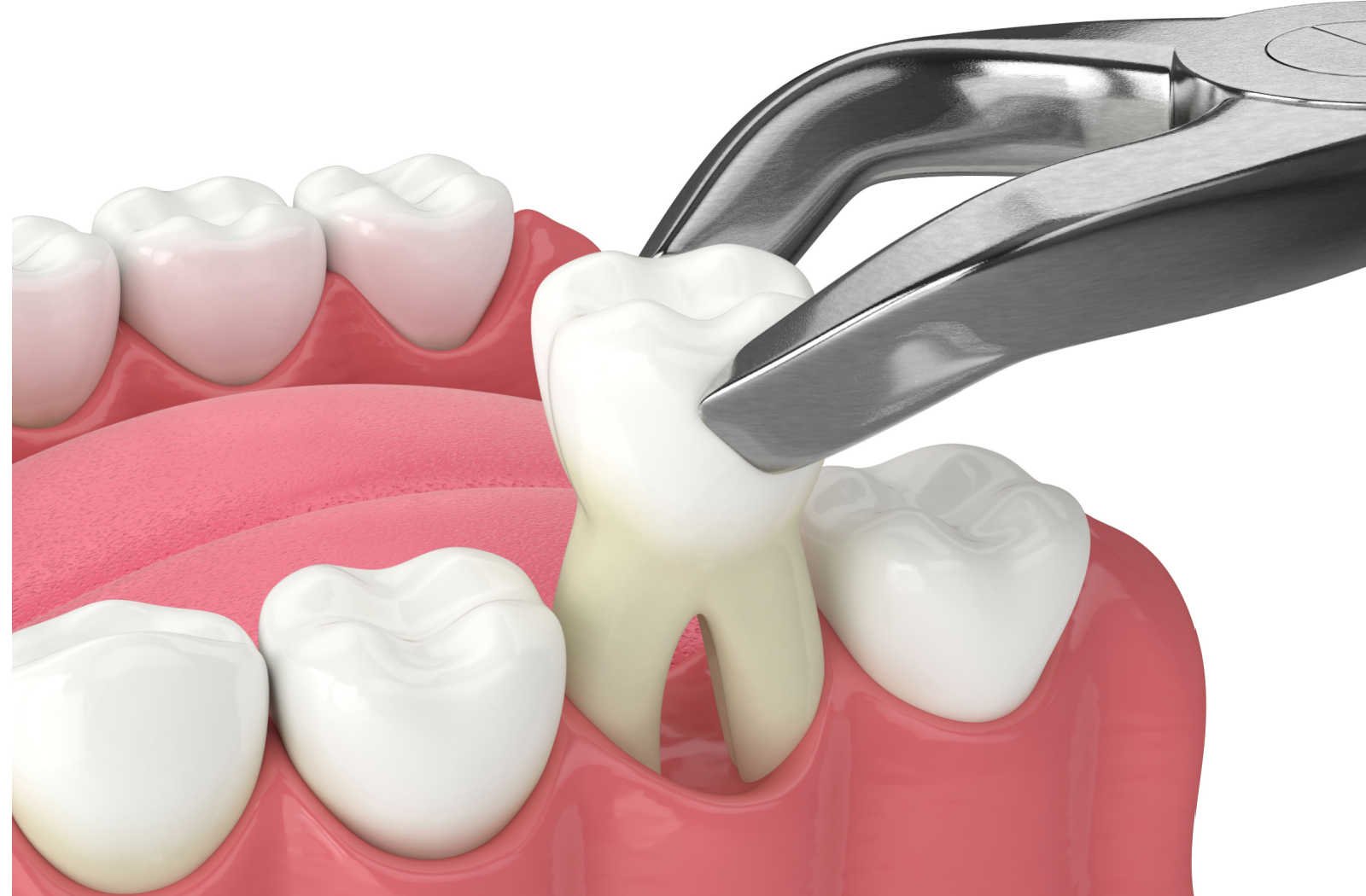
Whether it is a straightforward simple extraction or a complex impacted wisdom tooth
removal, The Smile Edit in Kalyan Nagar offers precise, painless extractions with
clear pre-operative and post-operative guidance. We handle all impaction types — mesioangular,
distoangular, and horizontal — with transparent, type-specific pricing and a thorough
post-op care protocol.
✦ All Impaction Types✦ Painless Under Local Anaesthesia✦ From ₹1,500✦ Clear Post-Op Care Protocol
×
When a Tooth Cannot Be Saved, It Needs to Go Right
Extracting a tooth — whether a failing molar, a stubborn root stump, or an impacted wisdom tooth
pressing against its neighbour — is a procedure that carries more nuance than most patients expect.
Done well, it is painless, heals cleanly, and prevents far larger problems. Done poorly, it leads
to dry socket, delayed healing, or nerve discomfort.
At The Smile Edit in Kalyan Nagar, we take extractions seriously. We X-ray every case before
picking up an instrument. We explain exactly what type of extraction your tooth requires, what
the procedure involves, and what to expect during recovery — before we begin.
When Is a Tooth Extraction Necessary?
We always explore every option to save a tooth before recommending extraction. But there are
clear clinical situations where extraction is the right — and often the only — answer.
Indications for tooth extraction
Severely decayed tooth (non-restorable) — when a cavity has destroyed so much tooth structure that a filling, crown, or root canal cannot save it
Advanced periodontitis (gum disease) — teeth with severe bone loss that are significantly mobile and cannot be stabilised with treatment
Impacted wisdom teeth — third molars that are partially or fully trapped in bone and causing pain, infection, decay in the adjacent tooth, or cyst formation
Pericoronitis — recurrent infection of the gum flap (operculum) overlying a partially erupted wisdom tooth
Orthodontic extraction — planned removal of specific teeth (usually first premolars) to create space for teeth alignment
Fractured tooth with subgingival crack — a crack that extends below the gum line, making restoration impossible
Failed root canal / non-healing periapical abscess — when retreatment or apicectomy is not feasible
Retained deciduous (milk) teeth — baby teeth that have not fallen out and are blocking or displacing the adult tooth beneath
Supernumerary (extra) teeth — extra teeth causing crowding or displacing adjacent teeth
Pre-radiotherapy / pre-chemotherapy — teeth with poor prognosis are extracted before treatment begins, as extraction is hazardous after radiation
💡 We do not extract teeth we can save. If there is a viable path to
preserving your tooth through a root canal, crown, or periodontal treatment, we will
present it — along with an honest assessment of its long-term prognosis. Extraction is
always the last resort, not the easy way out.
When Extraction Must Be Deferred or Modified
Medical conditions that affect when and how we extract — and what we do about them.
Certain medical conditions mean extraction cannot proceed on the day of a walk-in
appointment. This is not a complication — it is responsible clinical practice.
We review your medical history at every appointment and manage these situations carefully.
Conditions requiring modified protocol or physician clearance
Blood thinners (anticoagulants) — patients on warfarin, aspirin,
clopidogrel, or direct oral anticoagulants (DOACs). We do not ask you to stop
these medications — we work with your physician to assess your INR/bleeding
risk and use haemostatic measures intra-operatively. Extraction is routinely safe
with appropriate precautions.
Bisphosphonate therapy — patients taking bisphosphonates
(alendronate, zoledronate) for osteoporosis or cancer carry a risk of
medication-related osteonecrosis of the jaw (MRONJ). We assess duration, route
(oral vs IV), and drug holiday feasibility with your physician before proceeding.
Uncontrolled diabetes — blood glucose must be reasonably controlled
before elective extraction, as poor glycaemic control significantly increases
infection and dry socket risk. Emergency extractions for acute pain can proceed with
antibiotic cover.
Uncontrolled hypertension — we measure blood pressure on the day.
If significantly elevated (>180/110), we defer elective extraction and refer you
for BP management first.
Recent heart attack or stroke — elective extractions are deferred
for at least 6 months after a cardiac event. Emergency pain is managed
conservatively in the interim.
Active infection at extraction site — acute dental abscesses with
cellulitis (spreading infection) can affect local anaesthetic efficacy. We may start
a course of antibiotics first and extract once acute inflammation has reduced.
Pregnancy — the second trimester (weeks 14–28) is the safest period
for elective extractions. We avoid the first trimester unless urgent, and defer
non-emergency procedures in the third trimester.
Bleeding disorders (haemophilia, thrombocytopenia) — require
haematology input and hospital-setting extractions in severe cases.
👉 Always bring a complete list of your current medications to your
appointment, including supplements, herbal remedies, and over-the-counter
drugs. This single step prevents the vast majority of day-of deferral situations.
Simple vs Surgical Extractions — What Is the Difference?
Not all extractions are the same. The type of extraction needed depends on whether the tooth is
accessible, how intact it is, and whether any surgical access to bone or gum is required.
Simple Extraction
The tooth is fully erupted and accessible above the gum line. Using local anaesthesia,
the tooth is loosened with an elevator and removed with forceps. The socket is then
cleaned and gauze is applied. Takes 5–20 minutes. Recovery 2–3 days.
Surgical Extraction
Required when the tooth is impacted, broken at gum level, or has complex root anatomy.
A small incision is made in the gum; bone may be lightly trimmed; the tooth is often
sectioned into pieces and removed in segments. Takes 30–60 minutes. Recovery 5–7 days.
Root Stump Removal
When only the root remains after a crown fractures. May be simple (forceps) or require
a small surgical approach depending on root depth, curvature, and surrounding bone.
Often straightforward and quick.
Mobile Tooth Extraction
Teeth with severe bone loss from advanced gum disease are often very mobile and extract
easily with minimal force and no anaesthetic in some cases. The focus shifts to socket
cleaning and healing optimisation rather than extraction technique.
Understanding Wisdom Tooth Impaction Types
"Impacted" simply means the wisdom tooth cannot fully erupt into its correct position — it is
blocked by the adjacent tooth, by bone, or by the jaw angle. The direction and depth
the tooth is positioned determines how complex the surgery is and what the recovery
looks like. The illustrations below show all seven presentations — from the simplest erupted
case to the most complex horizontal impaction, including retained root stumps.
Erupted
Fully through the gum, standing upright. Crown is visible and directly accessible — the simplest extraction scenario.
Simple extraction
Submerged
Crown mostly under the gum and bone. A gum flap (operculum) traps food, causing recurrent pain and infection.
Surgical
Vertical Impaction
Correct upright orientation but fully trapped in bone. Requires gum incision and bone access to release the crown.
Surgical — moderate
Mesioangular
Crown tilts ~45° forward, wedged against the adjacent molar. Most common lower impaction — must be sectioned for removal.
Surgical — moderate
Distoangular
Crown tilts ~45° backward toward the jaw ramus. The ramus blocks instrument access, making this the most difficult lower impaction.
Surgical — complex
Horizontal
Tooth lies 90° on its side, crown pointing directly into the adjacent molar's roots. Deepest, most complex extraction.
Surgical — most complex
Root Stumps
When a tooth's crown is lost — through severe decay, fracture, or a failed extraction — the root (or roots) remain behind in the jawbone. Retained stumps can cause chronic pain, abscess, cyst formation, and interfere with denture fitting or implant placement. Removal ranges from straightforward (accessible stump, forceps only) to surgical (deep, curved, or fractured root requiring bone access), depending on the depth and anatomy of the root.
Simple to surgical
💡 What the angle means for you: A mesioangular or distoangular tooth
requires the tooth to be sectioned (cut into 2–3 pieces) to be removed safely. A horizontal
tooth usually needs more bone access and is removed in multiple sections. The more complex
the angulation, the longer the surgery and recovery — but the procedure itself is always
painless under local anaesthesia.
Upper vs Lower Wisdom Teeth — Why Are They Different?
Upper (maxillary) wisdom teeth are generally easier to remove. The upper jaw bone
is softer and more cancellous, and the roots tend to be smaller and less curved. Most upper
wisdom teeth — even when submerged — can be removed with a straightforward surgical approach.
Lower (mandibular) wisdom teeth are significantly more complex. The lower jaw bone
is denser, roots are often longer and curved, and the inferior alveolar nerve runs below the tooth
roots. Additionally, the jaw's angle (ramus) limits how far instruments can access a distally
angled or horizontal tooth. This is why lower wisdom tooth surgery has a longer recovery and
carries a slightly higher risk of post-operative jaw stiffness (trismus).
Before Your Extraction — How to Prepare
Simple steps that make the procedure smoother and healing faster.
On the day of extraction
Eat a proper meal 2–3 hours before your appointment — do not come on an empty stomach. Post-extraction nausea or faintness is far more common in patients who have not eaten.
No alcohol for 24 hours before — alcohol thins the blood and interacts with local anaesthetics and analgesics.
Brush and floss normally — a clean mouth reduces oral bacteria and post-operative infection risk.
Arrange transport home if anxious — while local anaesthesia does not impair driving, some patients feel light-headed after procedures. Having someone pick you up is always a good idea for surgical cases.
What to tell us before we begin
All current medications — especially blood thinners (warfarin, aspirin, clopidogrel), bisphosphonates, corticosteroids, and immunosuppressants
Diabetes — your most recent blood glucose reading or HbA1c
High blood pressure — we will measure this on the day; let us know if it has been running high recently
Any known anaesthetic allergies — particularly to lignocaine (lidocaine) or similar local anaesthetics
Any history of prolonged bleeding — after previous surgeries, cuts, or injections
Pregnancy or possibility of pregnancy
Before a surgical impacted wisdom tooth extraction specifically
We will review your OPG (full-jaw X-ray) or periapical X-ray to assess root depth, angulation, and proximity to the inferior alveolar nerve
You may be prescribed a pre-operative antibiotic course (usually amoxicillin or metronidazole) if there is active infection around the tooth
An anti-inflammatory (ibuprofen or similar) taken the evening before and morning of surgery significantly reduces post-operative swelling — we will advise based on your history
No smoking for at least 24 hours before the extraction — smoking dramatically increases dry socket risk
👉 The most important pre-op step is the honest medical history.
We cannot manage what we do not know about. A complete list of medications takes
2 minutes to share and prevents the vast majority of complications.
Extraction Pricing at The Smile Edit, Bangalore
We price extractions by type — not a flat fee for all cases. The complexity of each extraction
is assessed from your X-ray and confirmed before we begin.
Molar Extraction 1st and 2nd molars · simple or mildly surgical₹4,000
Anterior Teeth & Premolars Front teeth, canines, premolars₹3,000
Mobile Teeth & Root Stumps Each tooth / stump · loose teeth or residual roots only₹1,500 each
All prices include local anaesthesia, post-operative gauze and dressing, and verbal post-op care instructions. Suture removal at the 7-day follow-up visit is included. Prescription medications (antibiotics, analgesics) billed separately at actuals.
What Happens During a Surgical Wisdom Tooth Extraction
For a surgical impacted wisdom tooth, here is exactly what happens at The Smile Edit — so there
are no surprises on the day.
X-Ray Review & Treatment Plan
We begin by reviewing your OPG or periapical X-ray to precisely map the tooth's
position, angulation, root length, curvature, and proximity to the inferior alveolar
nerve (for lower teeth). This step determines exactly how the tooth will be
approached and sectioned — there is no guesswork.
Local Anaesthesia
A small amount of topical gel is placed on the gum before the injection — most patients
barely feel the needle. We wait fully until the area is completely numb before
proceeding. You will feel pressure and movement, but no pain. If you feel any sharp
sensation at any point, raise your hand and we will add more anaesthetic.
Gum Incision & Flap Elevation
A small, precise incision is made in the gum over the impacted tooth. The gum is
gently lifted back to expose the underlying bone and tooth crown. The incision is
designed to heal with minimal scarring and maximum blood supply to the flap.
Bone Access (Where Required)
For deeply impacted teeth, a small amount of bone overlying the crown is carefully
trimmed using a surgical handpiece — this provides access and reduces the force
needed to remove the tooth. Minimising bone removal is a priority; we remove only
what is necessary.
Tooth Sectioning & Removal
For mesioangular, distoangular, and horizontal impactions, the tooth is divided into
2–3 sections and each section removed individually. This is the standard approach —
it is far safer and causes less force to surrounding structures than attempting to
remove the whole tooth intact.
Socket Cleaning & Suturing
The socket is irrigated thoroughly to remove all debris, then the gum flap is
repositioned and sutured with 2–4 sutures. We use resorbable or non-resorbable sutures
depending on the case — if non-resorbable, you return at 7 days for removal.
Post-Op Instructions & Prescription
Before you leave, we walk you through exactly what to expect for the next 7 days —
what is normal (swelling, bruising, mild oozing), what requires a call to us (heavy
bleeding, severe pain from day 3), and what to eat and avoid. You leave with a
written post-op instruction sheet and all required prescriptions.
✦ Dr. Amrita personally attends or directly supervises every extraction at The Smile
Edit — no case is delegated. For particularly complex presentations, she brings in
a consultant Oral & Maxillofacial Surgeon to assist, ensuring that
even the most challenging cases are handled with specialist-level precision. Your safety
is never compromised by attempting something beyond the right scope of care.
After Your Extraction — What to Expect & How to Heal Well
Day-by-day recovery guide — swelling, diet, pain, and warning signs.
Immediately after (first 2 hours)
Bite firmly on the gauze pad for 30–45 minutes. This pressure helps the clot form — do not keep lifting the gauze to check.
Do not spit, rinse, or use a straw — suction and spitting dislodge the blood clot and are the leading cause of dry socket.
No hot food or drinks for the first few hours — heat dilates blood vessels and increases bleeding.
Some oozing of blood-tinged saliva is completely normal for the first few hours. Frank heavy bleeding that soaks through a fresh gauze pad in under 15 minutes is not normal — call us.
Start your prescribed pain relief before the anaesthesia fully wears off — this keeps you comfortable through the transition.
Days 1–3: Swelling phase
Apply an ice pack to the outside of your cheek — 20 minutes on, 20 minutes off — for the first 24 hours. After 24 hours, switch to a warm compress if swelling persists.
Swelling peaks at 48–72 hours and then gradually reduces. This is entirely normal after surgical extractions — it does not mean infection.
Sleep with your head elevated on an extra pillow for the first night to reduce swelling.
Soft, cool diet — yoghurt, idli, soft rice, mashed vegetables. Avoid hot, spicy, hard, or crunchy foods. Avoid anything that requires vigorous chewing on the extraction side.
Take all prescribed medications as directed — do not stop antibiotics early even if you feel better.
Begin gentle salt-water rinses from Day 2 — dissolve half a teaspoon of salt in a glass of warm water and gently let it wash over the socket. Do not gargle forcefully.
Days 3–7: Healing phase
Pain and swelling should be steadily improving. By Day 5–7 most patients are comfortable with minimal discomfort.
Jaw stiffness (trismus) after lower wisdom tooth surgery is common and can last 1–2 weeks. Gently opening and closing your mouth a few times a day helps. This is due to muscle bruising around the surgical site, not a joint problem.
Bruising on the cheek or neck is normal and harmless — it resolves within 7–10 days.
Return at 7 days for suture removal and a healing check.
Strict post-op rules — do not ignore these
🚫 No smoking for at least 5–7 days — smoking is the single biggest cause of dry socket and significantly delays healing
🚫 No straws for 48 hours — suction dislodges the blood clot
🚫 No vigorous rinsing or spitting for 24 hours
🚫 No hard, crunchy, or chewy food on the extraction side for 5–7 days
🚫 Do not probe the socket with your tongue, finger, or toothpick
Warning signs — call us immediately if you experience
Heavy bleeding that does not stop after 45 minutes of firm gauze pressure
Severe, sharp, throbbing pain starting Day 3 or 4 that radiates to your ear — this is the classic presentation of dry socket and requires a clinic visit for a medicated dressing (rapid relief)
Fever above 38°C — may indicate infection, requires antibiotics
Swelling that continues to increase after 72 hours — normal swelling peaks and reduces; increasing swelling after 3 days is a red flag
Numbness or tingling that persists beyond 24 hours — especially in the lower lip, chin, or tongue after lower wisdom tooth surgery
💡 Dry socket is the most common post-extraction complication — it affects roughly 2–5% of simple extractions and up to 25–30% of lower wisdom tooth cases in smokers. The good news: it is very easily treated when you come in. Do not suffer at home — it will not resolve on its own.
Myths & Honest Risks of Dental Extractions
What the internet gets wrong — and what to genuinely watch for.
Common myths — debunked
"Tooth extraction is extremely painful."The procedure itself is painless under local anaesthesia. Post-operative soreness is real but well managed with standard pain relief. Most patients say it was much easier than they expected.
"You need to remove all four wisdom teeth at once."Not at all. We extract the teeth that need removal — one, two, or four depending on clinical indication. Removing all four simultaneously is sometimes done under general anaesthesia, but at The Smile Edit we typically stage procedures for comfort and manageability.
"Wisdom teeth always need to come out."Not true. Fully bony, asymptomatic wisdom teeth that are not causing decay in adjacent teeth or cyst formation can often be monitored safely. We extract only when there is a clear clinical reason.
"You should stop blood thinners before extraction."Almost always incorrect. Stopping blood thinners carries stroke and clot risks far greater than the bleeding risk of a dental extraction. We manage haemostasis without stopping your medication, in consultation with your physician where needed.
"Extraction leaves a permanent gap that weakens your jaw."For wisdom teeth (which were never functional teeth), no replacement is needed. For other extracted teeth, the gap should be addressed with an implant, bridge, or partial denture to prevent bone loss and shifting of adjacent teeth.
Genuine risks of surgical extraction (low but real)
Dry socket — most common complication; treatable with a medicated dressing
Infection — rare with proper antibiotics and oral hygiene
Inferior alveolar nerve involvement — temporary numbness of the lower lip or chin after lower wisdom tooth surgery is uncommon but possible; permanent nerve damage is rare (<1%) and typically avoided with careful X-ray planning
Trismus (jaw stiffness) — common but temporary, resolves in 1–2 weeks
Fracture of adjacent tooth or bone — rare, and mitigated by sectioning the tooth rather than using excessive force
Frequently Asked Questions
The questions our Bangalore patients ask most often about tooth extractions and wisdom tooth
removal. If yours is not here, WhatsApp us — we are happy to explain anything in detail.
Does tooth extraction hurt?
No — the procedure itself is painless because it is done under local anaesthesia. You will feel pressure and movement, but not pain. If you feel anything sharp at any point, tell us and we will add more anaesthetic. Post-procedure soreness for 2–5 days is normal and well managed with the medications we prescribe.
How long does wisdom tooth surgery take?
A straightforward erupted wisdom tooth can be removed in 10–20 minutes. Surgical impacted cases (mesioangular, distoangular, or horizontal) typically take 30–60 minutes per tooth depending on depth, angulation, and root anatomy. We will give you a realistic time estimate after reviewing your X-ray.
What is dry socket and how do I prevent it?
Dry socket (alveolar osteitis) occurs when the blood clot that forms in the extraction socket is dislodged or dissolves before the socket heals, exposing the underlying bone. It typically appears 3–4 days post-extraction as a sharp, deep pain that radiates to the ear. To prevent it: do not smoke, do not spit forcefully, do not use a straw, and avoid rinsing vigorously for the first 24 hours. If dry socket occurs, come in immediately — it is easily treated with a medicated dressing that provides rapid relief.
How long is recovery after wisdom tooth removal?
Most patients feel comfortable within 3–5 days for simple cases. For surgical impacted extractions, plan for 5–7 days of recovery — swelling peaks at 48–72 hours and then gradually reduces. Jaw stiffness (trismus) after lower wisdom tooth surgery can take 1–2 weeks to fully resolve. Most patients return to normal activity within a week.
Is it always necessary to remove an impacted wisdom tooth?
Not always immediately. We recommend removal when an impacted wisdom tooth is causing pain, recurrent infections (pericoronitis), decay in the adjacent tooth, cyst formation, or is unsuitably positioned for oral hygiene. Asymptomatic, fully bony impacted wisdom teeth may be monitored rather than removed immediately — but we will give you an honest recommendation based on your X-ray and clinical presentation.
What is the difference between a simple and surgical extraction?
A simple extraction is done on a tooth that is fully erupted and accessible — it uses local anaesthetic, an elevator, and forceps, and takes 5–20 minutes. A surgical extraction is needed when the tooth is impacted, broken at gum level, or has complex root anatomy. It involves a gum incision, possible bone removal, and tooth sectioning before removal. Surgical extractions take longer and have a slightly longer recovery but are equally painless during the procedure.
Can I eat before my extraction appointment?
Yes — and we recommend it. Have a normal meal 2–3 hours before your appointment. Avoid coming on an empty stomach, as this can make you feel faint after the procedure. Avoid alcohol for 24 hours beforehand.
How much does wisdom tooth removal cost in Bangalore?
At The Smile Edit in Kalyan Nagar: upper wisdom tooth (erupted) ₹5,000; upper wisdom tooth (submerged/impacted) ₹8,000; lower wisdom tooth mesioangular or distoangular ₹8,000; lower wisdom tooth horizontal (deep) ₹10,000. Routine molar extractions ₹4,000; front teeth and premolars ₹3,000; mobile teeth and root stumps ₹1,500 each. Pricing is transparent and confirmed after X-ray review.
I am on blood thinners — can I get a tooth extracted?
Yes, in most cases — but we need to plan it carefully. Do not stop your blood thinners without consulting your physician. We will review your INR or medication type, take appropriate haemostatic measures during extraction, and advise whether physician clearance is needed first. We routinely perform extractions on patients on aspirin, clopidogrel, and warfarin with appropriate precautions.
When should I call the clinic after an extraction?
Call us immediately if you experience: heavy bleeding that does not stop after 45 minutes of firm gauze pressure; severe throbbing pain starting on day 3 or 4 (possible dry socket); fever above 38°C; rapidly increasing swelling after 72 hours; or numbness or tingling that persists beyond 24 hours. For suture removal, your follow-up appointment is at 7 days.
Why Choose The Smile Edit for Extractions?
X-Ray Before Every ExtractionWe never extract blind. Every case is reviewed on X-ray to map root anatomy, identify risks, and plan the safest approach before we begin.
All Impaction Types ManagedMesioangular, distoangular, horizontal, submerged — we handle the full range of wisdom tooth presentations in-clinic in Kalyan Nagar.
Transparent Pricing by TypeYou know the exact cost before we start — priced by impaction type and procedure complexity, not a flat rate that under- or over-charges your specific case.
Painless TechniqueTopical gel before the injection, complete anaesthesia before proceeding, and the willingness to add more anaesthetic if needed. Your comfort is the priority.
Tooth Sectioning as StandardComplex impacted teeth are sectioned into pieces rather than removed by force — this reduces trauma, preserves surrounding bone, and speeds recovery.
Personal Care & Specialist BackupDr. Amrita personally attends or directly supervises every extraction — no case is delegated. For particularly complex presentations, she brings in a consultant Oral & Maxillofacial Surgeon, ensuring specialist-level precision when it matters most.
Full Post-Op ProtocolWritten and verbal post-operative instructions, prescribed medications, and a 7-day follow-up included. You leave knowing exactly what is normal and what is not.
Blood Thinner & Medical Condition ExperienceRoutine management of extractions in patients on anticoagulants, with diabetes, and with other systemic conditions — with appropriate precautions, not automatic refusals.
Worried About a Wisdom Tooth? Let Us Take a Look.
A quick consultation — X-ray, clinical review, and honest recommendation — is all it takes to
know whether your wisdom tooth needs to come out, and what the procedure involves. No
pressure, no surprises.